Silent Night Christmas Arabesque SVG
A Quiet, Elegant Statement—Not Just Another Holiday Clipart
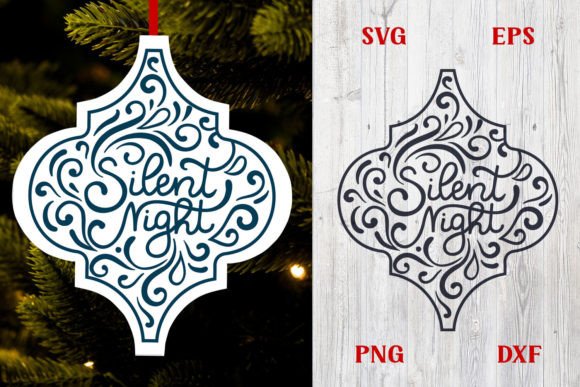
First impression? This isn’t a loud, glitter-bright “Merry Christmas” banner. Silent Night Christmas Arabesque SVG leans into reverence and rhythm—the kind you’d want stitched onto a linen tea towel for a quiet holiday kitchen, or framed in an heirloom baby blanket. The arabesque shape wraps the phrase like a gentle embrace: flowing, balanced, and intentionally unhurried. Those hand-drawn ornaments aren’t fussy—they’re subtle anchors: a single star, a slender pine sprig, maybe a delicate bell—all drawn with soft line weight and breathing space. It feels handmade *before* it’s even stitched.
Where It Shines: Real Projects, Real Customers
I recently tested Silent Night Christmas Arabesque SVG as the centerpiece for a limited-run batch of organic cotton tote bags—intended for a local boutique’s holiday gifting collection. Not mass-produced. Not rushed. These were meant to feel intentional: something a customer would keep long after the season ends. And that’s exactly where this design excels.
- Embroidered tote bag design: Hooped cleanly on medium-weight canvas with tear-away + cut-away stabilizer combo. The arabesque curve followed the bag’s natural drape without distortion. Customers commented on how “calm” and “thoughtful” it felt—no small thing when competing with flashier seasonal designs.
- Sweatshirt embroidery: Used on charcoal French terry. Kept thread colors muted—ivory satin stitch for lettering, sage green for ornaments. The low-contrast palette held up beautifully because the design’s shape carries the weight—not just color.
- Baby embroidery & nursery decor: Stitched onto a 100% cotton swaddle (with lightweight stabilizer and reduced density). The gentle curves and open layout prevented stiffness—critical for infant-safe items. Parents responded strongly to the quiet dignity of “Silent Night” versus typical candy-cane motifs.
- Embroidered patch & apron design: Translated well to twill-backed patches. The clean outer contour made cutting and fusing straightforward. On a linen-cotton apron, it landed as artisanal—not craft-store-generic.
Where to Proceed With Care
This isn’t a one-size-fits-all machine embroidery design. Its elegance depends on thoughtful execution.
- Small hoop sizes: The arabesque shape needs room. Below 4" x 4", key ornament details risk becoming indistinct or overly dense. If you’re stitching on caps or curved surfaces, confirm the design fits your smallest practical hoop *before* digitizing or purchasing.
- Textured or stretchy fabric: That flowing outline relies on stability. On slubbed linen or jersey, use appropriate cut-away stabilizer—and consider simplifying tiny ornament elements if stitch density overwhelms the surface.
- Dark fabric & thin layers: The design uses fine line work. On black cotton poplin or lightweight voile, test fill stitch density first. Over-stuffing small areas can cause puckering; under-stuffing loses definition. A running stitch outline + light fill often reads cleaner than heavy satin.
- Frequent-wash items: For kitchen towels or baby onesies, avoid ultra-thin satin stitch on lettering. Reinforce high-curve zones (like the top of the arabesque arch) with a second pass or slightly wider satin column—especially if using polyester thread on cotton.
What It Adds—Beyond the Stitch
Silent Night Christmas Arabesque SVG elevates perceived value quietly. It doesn’t scream “handmade”—it *whispers* it. That matters for Etsy sellers positioning premium holiday embroidery, craft fair vendors building repeat buyers, or small shop owners curating cohesive seasonal collections. Customers don’t just buy a phrase; they buy atmosphere. When paired with quality fabric, precise stitching, and restrained thread choices, this design signals care—not convenience.
It also supports brand consistency. Unlike generic snowflake bundles, this has a distinct visual voice: lyrical, reverent, unhurried. That makes it easier to extend across product lines—a matching pillow cover, a set of tea towels, even a printable mockup for your online store—without feeling repetitive.
Practical Designer Notes Before You Stitch
Before committing to production—or listing a finished product—do these five things:
- Test on scrap fabric that matches your final substrate (weight, weave, stretch). Note how the arabesque flows—and where corners or curves pull.
- Check thread color contrast in both natural and artificial light. Ivory-on-charcoal reads differently at dusk than midday.
- Review stitch density in the ornaments and lettering. Dense fill in tight curves = more thread, more heat, more risk of distortion.
- Confirm licensing—especially if selling finished embroidered items or bundling this as part of a digital embroidery file pack. Since it’s listed under Crafts and Graphics, verify commercial use rights directly with the source.
- Mock it up in black and white first. If the shape and spacing hold up without color, you’ve got strong design fundamentals.
Final Thought: A Design That Earns Its Place
Silent Night Christmas Arabesque SVG won’t dominate a holiday market stall—but it might be the piece a customer lingers over, touches gently, and chooses because it feels like a pause. That’s rare. Use it where intention matters more than impact: personalized gifts, boutique merchandise, heirloom baby items, or any handmade product where quiet beauty builds trust. It’s not background decoration. It’s a considered detail—exactly what thoughtful embroidery design should be.