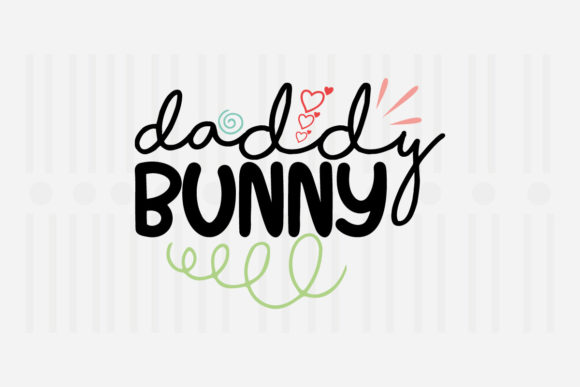
Daddy Bunny Easter SVG: Crafts & Graphics Review
As a graphic designer who’s built brand identities for handmade businesses, seasonal Etsy shops, and local event campaigns, I recently evaluated Daddy Bunny,Easter SVG for a real client project: a spring-themed boutique line of organic cotton onesies, ceramic mugs, and printable wall art targeting new parents and eco-conscious gift shoppers. My goal wasn’t just to see if it “looks cute”—it was to assess whether this graphic design asset delivers functional, on-brand, commercially viable value across multiple touchpoints.
First Impression: Playful, Warm, and Instantly Seasonal
The moment I opened the SVG file, the mood landed—soft curves, rounded ears, gentle expression, and subtle Easter motifs woven into the bunny’s silhouette (think tiny eggs nestled in its paws or a faint floral wreath). It avoids cartoonish exaggeration while still feeling joyful and approachable. This isn’t a generic clipart bunny; it’s a creative design with intentional weight distribution, balanced negative space, and clean vector paths. That makes it feel trustworthy as a commercial design asset—not just decoration.
Where Daddy Bunny,Easter SVG Shines in Real Client Work
This Easter SVG Quote. design for t-shirt, poster, mug, etc. excels where warmth, recognition, and seasonal resonance matter most:
- Product mockups: It scales beautifully on t-shirt front placements, mug wraps, and tote bag prints—especially when paired with earthy or pastel palettes. The 100-color changeability means I can match exact brand hex codes without losing fidelity.
- Social media graphics: On Instagram carousels and Pinterest pins, it serves as a strong visual anchor—adding emotional appeal without competing with copy. Its friendly tone supports storytelling for small business branding.
- Printable design collections: As part of an Easter-themed digital product bundle, it holds up across sticker sheets, greeting cards, and nursery wall art—thanks to the included EPS and SVG files at 300dpi.
- Cricut projects & sublimation design: The clean cut lines and minimal internal detail reduce weeding time and ensure crisp transfers on fabric and ceramic.
- Packaging design: Used subtly on tissue paper, tags, or label accents, it reinforces brand personality without overwhelming minimalist packaging layouts.
Design Contexts That Demand Extra Scrutiny
While versatile, Daddy Bunny,Easter SVG isn’t universally seamless. In these scenarios, I recommend thoughtful integration—or reconsidering its role:
- Small sizes: Below 1.5 inches wide, fine details like egg textures or ear contours blur. Always test at actual usage scale—especially for sticker design or tag icons.
- Crowded layouts: It doesn’t recede gracefully. Pair it with generous whitespace or use it as the sole focal point—not one element among five in a flyer.
- Minimalist or corporate branding: Its charm lies in warmth and craft—not sleekness. Avoid using it for law firms, fintech, or luxury skincare unless intentionally juxtaposing “handmade” as a brand differentiator.
- Low-contrast backgrounds: Light gray or beige backgrounds mute its impact. Always preview on both light and dark surfaces—and test black-and-white output for print consistency.
Typography & Visual Hierarchy: How It Plays With Type
I tested Daddy Bunny,Easter SVG beside several font families common in creative marketplace assets:
- With serif fonts (e.g., Playfair Display), it adds nostalgic charm—ideal for vintage-inspired invitations or editorial design.
- Paired with sans serif fonts (e.g., Montserrat), it feels modern and accessible—perfect for social media graphics or Canva templates aimed at millennial parents.
- Next to script or handwritten fonts, it risks visual clutter. Use only one expressive element per composition—either the bunny or the type, not both competing for attention.
- Against display fonts, it works best when the type is bold and simple—letting the illustration breathe as a supporting brand element.
Practical Designer Notes Before Client Deployment
Before clearing Daddy Bunny,Easter SVG for a paid project, I always run these checks:
- Confirm the commercial license explicitly permits use in client deliverables—including print-on-demand, Etsy products, and digital resale bundles.
- Open the SVG in Illustrator to verify path integrity—no stray points, overlapping anchors, or embedded raster elements that could break scaling.
- Export to PNG at multiple sizes (64px, 512px, 2000px) and inspect transparency edges—critical for sticker design and web design overlays.
- Place it on real product mockups (not just white backgrounds) to evaluate contrast, proportion, and emotional resonance.
- Test print output on both coated and uncoated stock—vector clarity matters, but color rendering shifts across paper types.
- Compare how it reads alongside the client’s existing logo, palette, and voice. Does it extend their brand identity—or sit beside it as a seasonal add-on?
Final Verdict: A Thoughtfully Crafted Seasonal Asset
Daddy Bunny,Easter SVG isn’t just another Easter SVG Quote. design for t-shirt, poster, mug, etc.—it’s a well-executed digital product built for real-world application. For designers supporting handmade businesses, local events, or seasonal marketing campaigns, it delivers reliable performance across t-shirt design, packaging design, social media graphics, and printable design. Its strength lies in emotional authenticity—not trend-chasing—and that builds trust with audiences who value intentionality over flash.
If your client needs a warm, ownable, and technically sound visual for spring launches, this graphic design asset earns a spot in the working toolkit—provided you treat it with the same care you’d give any custom illustration: test rigorously, place thoughtfully, and always align it with the deeper story the brand is telling.